Free · In-browser · No uploads

Face Shape Detector: Find Out What Face Shape You Have

This face shape detector reads your outline from a straight-on photo, or from four tape-measure numbers, and tells you which of the six common shapes you are closest to: oval, round, square, heart, diamond or oblong. You also get the runner-up shape and the ratios behind the result.

Your photo never leaves your device. Detection runs in your browser. Nothing is uploaded, stored or shared.

Use a straight-on photo with your hair pulled back, a neutral expression and even light. The detection model (about 13 MB) downloads the first time you analyze a photo.

See the complete photo and measurement manual
Complete visual manual

How to Get a Reliable Face-Shape Result

Choose either a straight-on photo or four manual measurements. Photo mode is faster; measurements are the better way to confirm a close or uncertain result.

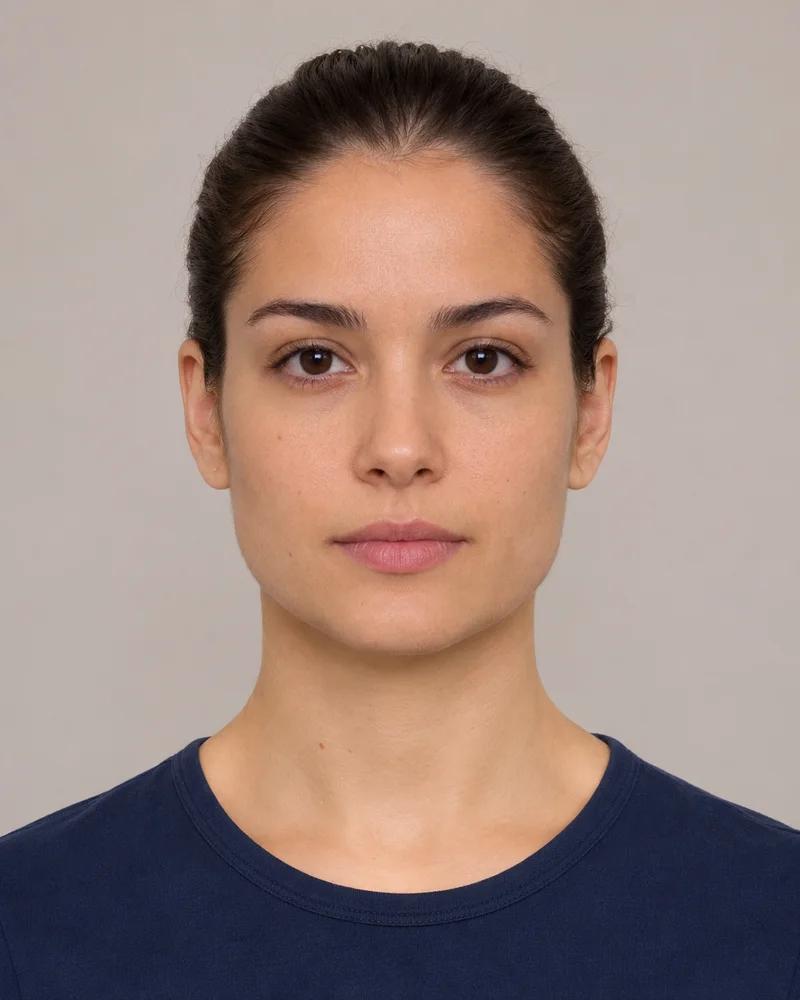
Woman demonstrating a correct straight-on photo for face-shape detection
Example for women
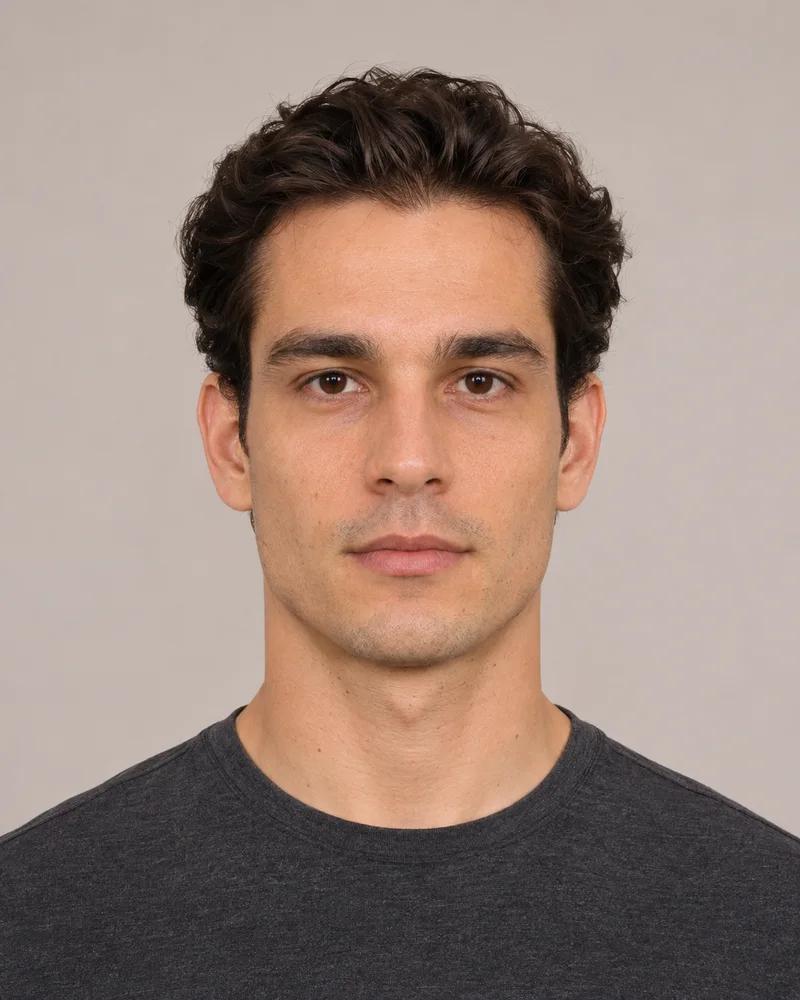
Man demonstrating a correct straight-on photo for face-shape detection
Example for men
1

Photo or Live Camera

  1. Pull hair away from the forehead, temples, ears and jaw. Remove glasses and hats.
  2. Position the camera at eye level and at least an arm's length away to reduce lens distortion.
  3. Face the lens directly with your head level and a relaxed, neutral expression.
  4. Use soft, even front light. Make sure the full hairline, chin and both sides of the face remain visible.
  5. Choose Upload a photo or Use my camera, then review the landmark overlay before trusting the result.
Avoid close selfies, head tilts, smiles, side angles, one-sided lighting and beauty filters. These can change the apparent width and length ratios.
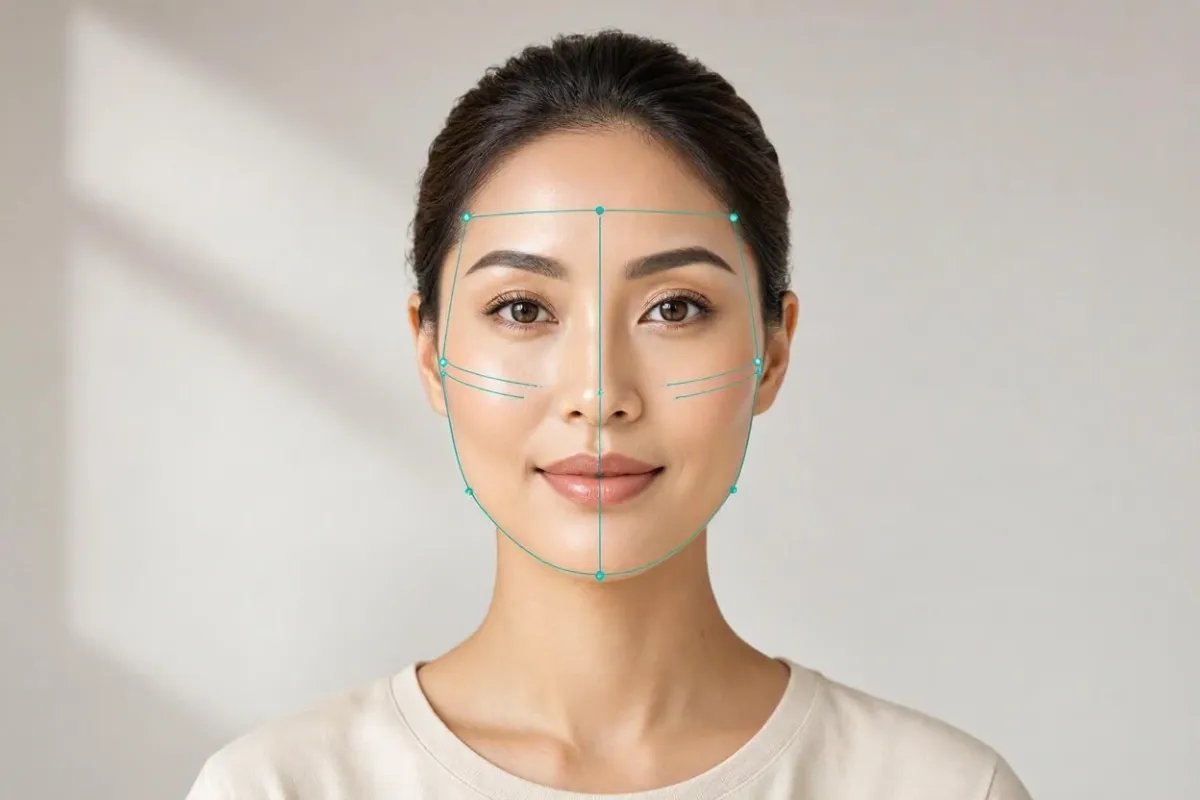
Front-facing portrait showing the forehead, cheekbone, jaw and face-length measurement lines
Measure straight across each width; do not curve the tape around the face.
2

Enter Manual Measurements

  1. Forehead: measure its widest point, usually halfway between the brows and hairline.
  2. Cheekbones: measure between the outermost high points below the eyes.
  3. Jaw: measure straight between the widest jaw corners—not along the curved jawline.
  4. Face length: measure from the centre of the natural hairline to the tip of the chin.
  5. Use one unit throughout, measure twice, enter the averages, and choose the closest jawline description.
A soft tape is easiest, but hold it straight across the front. If you have a beard, estimate the underlying jaw bone; if your hairline has changed, use its original position.

Check the frame

The entire hairline, chin and both ears should fit inside the photo with a little space around them.

Check symmetry

The nose should sit near the centre and both ears should appear similar in size. Retake a turned photo.

Confirm the answer

Compare the photo result with manual measurements and read the top two shape guides when scores are close.

By Zohaib Hassan · Published

This is style guidance, not a medical or scientific assessment. Face-shape categories are a practical shorthand for proportions, and many faces sit between two of them. See our disclaimer.

How the face shape detector works

Photo-mode limitation: this is an experimental proportion estimate, not a validated face-shape diagnosis. A 16-portrait synthetic stress test found that the current hairline correction tends to favour Oval. Use the photo result as a starting point and confirm it with the manual measurements below.
  1. 01

    Find the landmarks

    In photo mode, a face-landmark model places 478 points across your face, including the edges of your forehead, cheekbones and jaw, the top of your face and your chin.

  2. 02

    Measure four distances

    From those points the tool measures forehead width, cheekbone width, jaw width and face length. In manual mode you type the same four measurements yourself.

  3. 03

    Turn them into ratios

    Length ÷ cheekbone width tells long from short. Forehead and jaw ÷ cheekbone width show where the face is widest. In photo mode, the jaw-corner angle separates soft jaws from angular ones.

  4. 04

    Compare with six shapes

    Your ratios are compared with a reference profile for each shape. The closest is your top match, the next closest is the runner-up, and the gap between them sets the rough confidence.

The classification rules are deliberately simple and visible. Every result shows your measured ratios, so you can check them against the descriptions in our guide to all six face shapes instead of taking a label on trust. The landmark count, stress-test result, privacy flow, and known failure modes are also recorded in the tool methodology.

How to take a photo that measures well

The detector can only measure what the camera sees. A few small changes make a big difference to the ratios, especially to face length and jaw width:

  • Face the lens squarely. Turning your head even slightly makes one cheek look wider than the other. The tool rejects photos where your nose sits clearly off-centre.
  • Keep the camera at eye level, about an arm's length away. Close-up phone selfies widen the middle of the face, and shooting from below exaggerates the jaw.
  • Pull your hair back. Hair over the forehead or around the jaw hides the edges the tool is measuring. A headband or ponytail helps.
  • Use soft, even light from the front. A window in daylight works well. Strong light from one side casts shadows that can move the detected jaw edge.
  • Keep a neutral expression. A wide smile lifts the cheeks and widens the lower face.
  • Remove glasses if you can. Thick frames can interfere with points around the temples.
Illustration of a person studying their reflection in a mirror, as you would when measuring your face by hand

Prefer a tape measure? Use manual mode

Switch to Enter measurements above if you would rather not use a photo, or if you want to double-check a photo result. You need a soft tape measure and a mirror. Measure the widest part of your forehead, the distance between the outer points of your cheekbones, the width across your jaw corners, and the length from the middle of your hairline to the tip of your chin. Our step-by-step guide to determining your face shape shows exactly where to place the tape for each one.

What is my face shape if I am a man?

Face shapes are the same six outlines for everyone, and the detector uses the same rules. Two things are more common for men and are worth correcting for. A beard adds visible width and corners at the jaw, which can push a round or oval face toward square. Measure the jaw bone itself, or analyse a clean-shaven photo. A receding hairline makes the face look longer than it is. Measure length from where your hairline was originally, which is usually where the forehead creases end.

What the result can and cannot tell you

A face shape is a useful shorthand for choosing haircuts, glasses frames and necklines, because those choices are mostly about balancing width and length. It is not a measure of attractiveness, and no shape is better than another. Real faces rarely match a textbook outline. That is why the detector always shows a runner-up and a rough confidence rather than a single verdict.

Face shape is also separate from your Kibbe body type. Kibbe typing is based on your whole body, so your outline alone does not decide it. If you are curious how the face fits into that system, our guide to reading your facial features for Kibbe covers bone structure and features in that context.

Your privacy

The face-landmark model and its runtime are served from this site and run on your device. Your photo or camera frame is processed in memory, is never uploaded, and is discarded when you leave or reload the page. Manual measurements stay in your browser too. See the privacy policy for how the site handles data in general.

Face shape detector FAQ

Keep going

Compare your result with the other shapes, confirm it by hand, or look at the rest of your personal style picture.