Face Shapes: A Guide to the Six Types and How to Tell Them Apart
Face shapes describe the outline of your face seen straight on, from hairline to chin. Six shapes cover most faces: oval, round, square, heart, diamond and oblong. Each is defined by the same four things: how long your face is compared with its width, and how your forehead, cheekbones and jaw compare in width.
By Zohaib Hassan · Published
This is style guidance, not a medical or scientific assessment. Face-shape categories are a practical shorthand for proportions, and many faces sit between two of them. See our disclaimer.
Why face shape matters for style
Knowing your face shape is useful for one practical reason: haircuts, glasses frames, necklines and even earrings all add width or length in particular places. When you know where your face is widest and how long it is relative to that width, you can choose styles that balance those proportions, or deliberately emphasise them, instead of guessing.
It is a shorthand, not a verdict. Faces are three-dimensional and rarely match a textbook outline, so treat the categories below as reference points. If you land between two, borrow ideas from both.
Want an answer first? The free face shape detector estimates your shape from a photo or four measurements in your browser, and the guide to determining your face shape by hand walks through the tape-measure method step by step.
Types of face shapes compared
The table lines the six shapes up against the same measurements. Ratios are approximate ranges used in styling guidance, not fixed medical cut-offs.
| Shape | Length vs width | Widest point | Jaw | Chin |
|---|---|---|---|---|
| Oval | About 1.4–1.5× width | Cheekbones, forehead close behind | Soft curve, narrower than forehead | Rounded |
| Round | About equal to width | Cheeks | Soft curve, close to cheek width | Rounded |
| Square | About equal to width | All three similar | Broad with clear corners | Flat or square |
| Heart | Moderately longer | Forehead and cheekbones | Clearly narrower | Pointed |
| Diamond | Moderately longer | Cheekbones alone | Narrow | Pointed or narrow |
| Oblong | 1.55× width or more | All three similar | Straight sides | Rounded or squared |
The six face shapes
Each outline below shows the three width lines (forehead, cheekbones, jaw) and the length line used to tell the shapes apart.
Oval
An oval face is noticeably longer than it is wide, and it narrows gently from the cheekbones toward a rounded chin. The forehead is a touch wider than the jaw, and there are no strong corners anywhere on the outline.
- How to recognise it
- Face length is roughly 1.4 to 1.5 times your cheekbone width. Your cheekbones are the widest line, the forehead comes a close second, and the jaw curves rather than turning a corner.
- Oval or oblong?
- An oblong face is longer still (about 1.55 times the width or more) and its sides run straight down, so the forehead, cheekbones and jaw measure almost the same. An oval tapers.
Round
A round face has a length and width that are close to equal. The widest point is across the cheeks, the jaw curves smoothly into the chin, and the hairline is often rounded too.
- How to recognise it
- Face length is no more than about 1.25 times cheekbone width. Forehead, cheekbones and jaw are similar, and when you trace the jawline in a mirror you draw a curve, not a corner.
- Round or square?
- A square face has the same near-equal length and width, but the jaw turns a clear corner below the ear. On a round face that corner is softened into a curve.
Square
A square face is about as long as it is wide, with a strong jaw whose corners are easy to see and feel. The forehead, cheekbones and jaw are close in width, so the sides of the face look fairly straight.
- How to recognise it
- Face length is under about 1.3 times cheekbone width, the jaw is nearly as wide as the cheekbones, and the jaw corners form a defined angle rather than a curve.
- Square or round?
- Both are compact, but square has angular jaw corners and often a straighter hairline. Round has no corners at all.
Heart
A heart-shaped face is broad across the upper half and narrows noticeably toward a delicate or pointed chin. Some heart faces also have a widow’s peak, which strengthens the shape.
- How to recognise it
- Your forehead measures about the same as your cheekbones or wider, while your jaw is clearly narrower, often 75 to 80 percent of cheekbone width. The chin comes to a soft point.
- Heart or diamond?
- Both have a narrow, pointed chin. In a heart face the forehead is wide. In a diamond face the forehead is narrow too, so the cheekbones stand out alone as the widest line.
Diamond
A diamond face is defined by prominent cheekbones, with the outline narrowing both above (at the temples and forehead) and below (toward a tapered chin). It is usually longer than it is wide.
- How to recognise it
- Cheekbones are noticeably wider than both the forehead and the jaw. Measured, the forehead and jaw both come in well under the cheekbone width, and the chin is narrow or pointed.
- Diamond or heart?
- Look at the forehead. If it is about as wide as your cheekbones, you are closer to heart. If it narrows like the jaw does, you are closer to diamond.
Oblong
An oblong face, sometimes called rectangular or long, is much longer than it is wide. Forehead, cheekbones and jaw are close in width, so the sides of the face run fairly straight, and the chin can be rounded or squared.
- How to recognise it
- Face length is about 1.55 times cheekbone width or more, and the three widths are within a few percent of each other. In a mirror the outline reads as a long rectangle with softened corners.
- Oblong or oval?
- An oval face tapers from the cheekbones to the chin and is a bit shorter. An oblong face keeps a similar width all the way down and is longer.
How to work out which shape you are
The reliable way is to measure rather than eyeball. Looking in a mirror, most people notice one striking feature, such as full cheeks or a strong jaw, and pick a shape from that alone. Measuring makes you compare all four dimensions at once:
- Forehead width, across the widest part, roughly halfway between brows and hairline.
- Cheekbone width, between the outer points of the cheekbones.
- Jaw width, from one jaw corner (below the ear) to the other.
- Face length, from the centre of the hairline to the tip of the chin.
Then ask three questions. Is the length about equal to the cheekbone width (round or square), clearly longer (oval, heart or diamond), or much longer (oblong)? Which of the three widths is largest? And does the jaw turn a corner or curve? The full measuring guide turns those questions into a simple decision path, and the face shape detector does the arithmetic for you.
Face shape vs head shape
The two terms get mixed up, but they describe different things. Face shape is the front-view outline covered on this page. Head shape is the shape of the whole skull, including the crown and the back of the head, best judged from the side or from above. Head shape matters most for very short haircuts, buzz cuts and hats, where the back and top of the head are on show. Face shape matters most for anything that frames the face. A barber planning a skin fade will look at both.
Shapes that are easy to confuse
Most wrong guesses come from three pairs. Round and square share near-equal length and width, and the jaw corners decide it. Oval and oblong are both longer than wide, but oblong is longer still and keeps straight sides instead of tapering. Heart and diamond both narrow to the chin, and the forehead decides it: wide for heart, narrow for diamond. If your measurements put you on one of these borders, read both descriptions above and choose the one that matches what you see in the mirror.

Face shape and the rest of your style
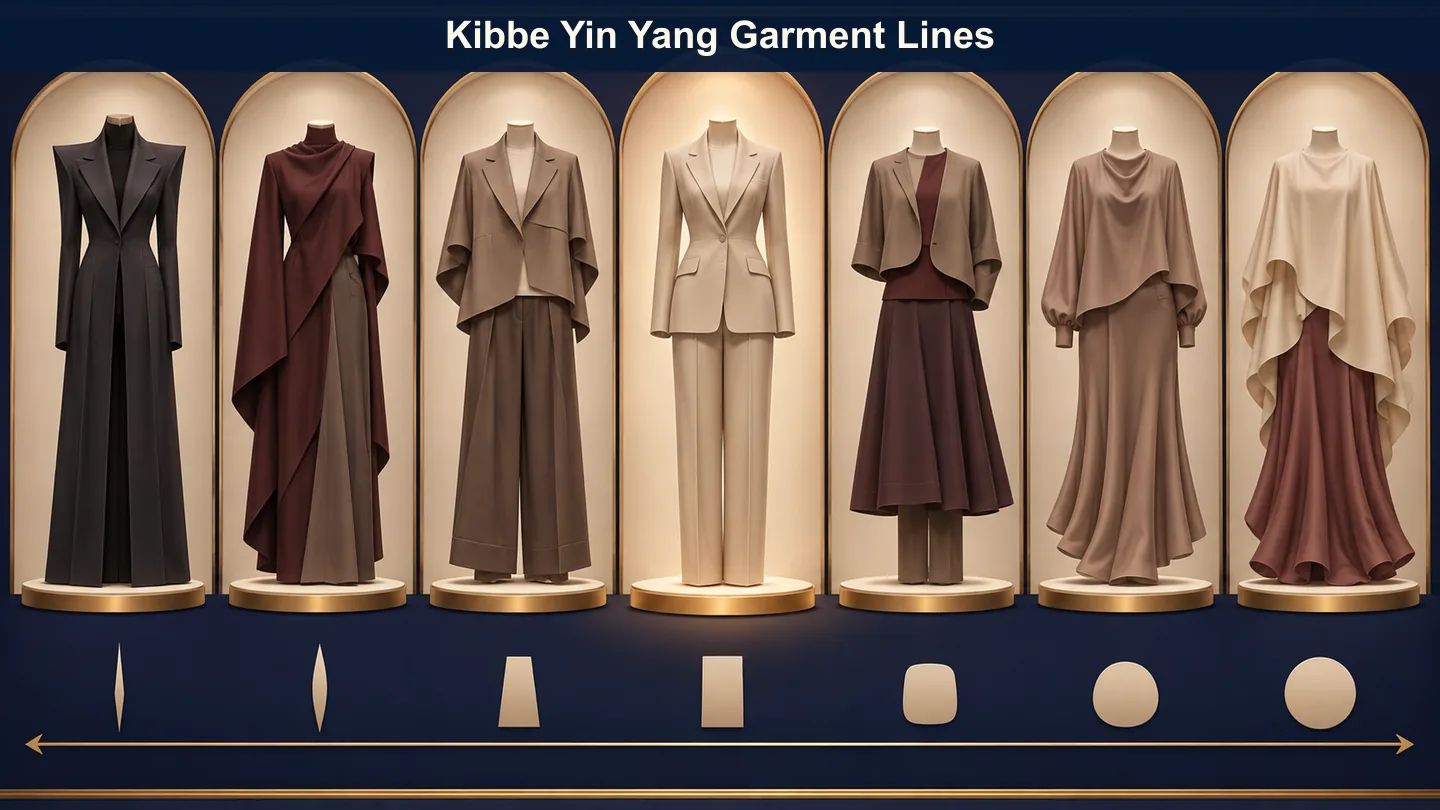
Face shape is one piece of a personal style analysis, alongside body type and coloring. It is worth being clear about what it does not do. Your face shape does not decide your Kibbe body type, because Kibbe typing is based on the whole body. Sharp or rounded features can still be a useful supporting clue, which our guide to facial features in the Kibbe system explains. The face shape and Kibbe guide shows how to combine the two systems without using facial outline as a typing shortcut. For colors rather than shapes, try the color analysis quiz.
Face shapes FAQ
How many face shapes are there?
Most style guides use six: oval, round, square, heart, diamond and oblong. Some add rectangle (often treated as the same as oblong), triangle or pear (a jaw wider than the forehead) and inverted triangle (close to heart). The six here cover the large majority of faces, and many people are a blend of two.
What is the most common face shape?
There is no reliable, large-scale count of face shapes, so any single percentage you see online should be treated with caution. Oval is often described as common and as the "balanced" reference shape, but in practice many faces sit between two shapes rather than fitting one cleanly.
What is the difference between face shape and head shape?
Face shape is the front-view outline from hairline to chin, set by forehead, cheekbone and jaw widths and face length. Head shape describes the whole skull, including the back and crown seen from the side or above. Head shape matters for short haircuts and hats. Face shape matters for framing styles like fringes, frames and necklines.
Can your face shape change over time?
Your bone structure is set in adulthood, but the soft tissue over it changes. Weight gain or loss, ageing and facial hair can make a face read rounder, longer or squarer than before. It is reasonable to re-check your shape after a big change rather than relying on a result from years ago.
Is one face shape better or more attractive than the others?
No. Face shapes describe proportions, not attractiveness. Oval is often called "ideal" in styling books only because it needs the least balancing, which makes it a convenient reference point. Every shape has haircuts, frames and necklines that suit it.
What is the quickest way to find out what face shape I have?
Use the free face shape detector with a straight-on photo, or measure your forehead, cheekbones, jaw and face length with a soft tape and enter the numbers. The two methods can disagree, so compare both outputs and treat borderline results as mixed rather than certain.